The team at iDiv is developing statistical tools to provide the participating institutions and project partners with reliable abundance estimates of the species identified by AI, e.g. by avoiding double counting. Using these data, they will then analyse the effects of urbanisation and other environmental factors on moth biodiversity. In addition, they will support the other partners by providing training data for other insects (such as bugs and midges), enabling the system to monitor a broader range of species.

Methods for calculating species diversity
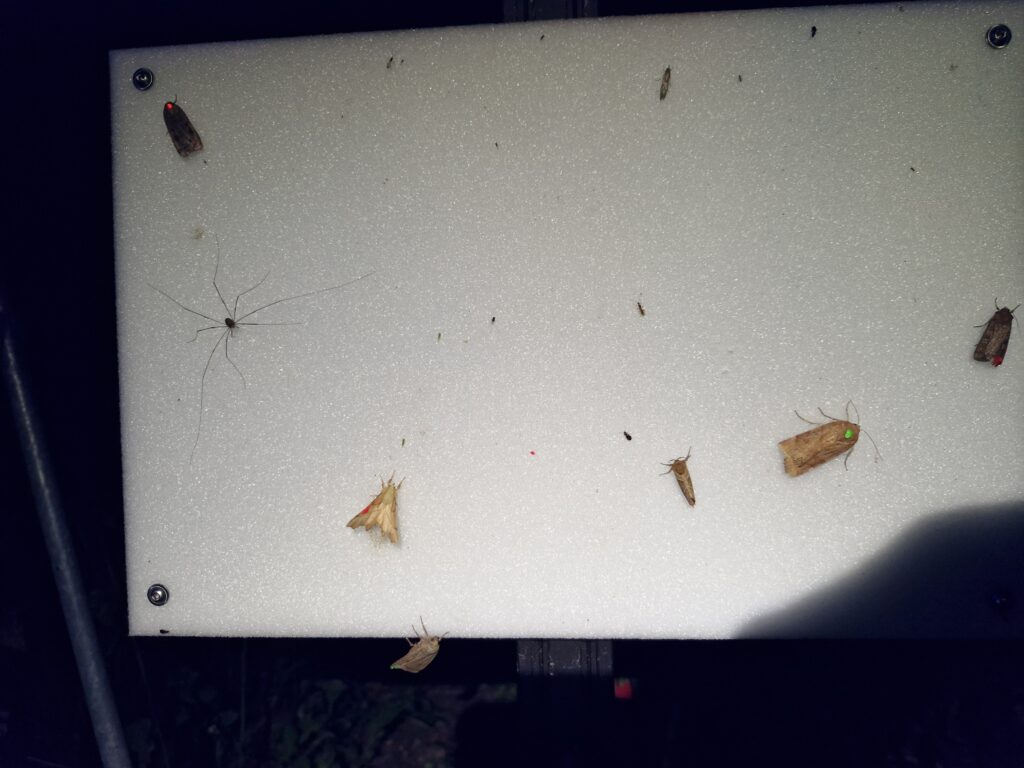
Before the collected data can be evaluated to answer ecological questions, we need to calculate useful biodiversity metrics from the AI identifications. Given the large amounts of data generated by the ARNIs, this is not straightforward. Therefore, appropriate tools must first be developed. In particular, we must take into account that the AI may count individual moths more than once if they move between photos. After providing corrected numbers, we can calculate various aspects of species diversity. These are then used for statistical analysis of the urbanisation gradient and other ecological questions.
Ecological analysis of the urbanisation gradient
ARNIs will be set up in eight German cities along a gradient from natural forest to highly sealed areas. This will allow us to study the effects of urbanisation on moths based on millions of observations of hundreds of species. We will compile information on the environmental conditions in the vicinity of each ARNI from maps, satellite images and field measurements. We will use classical statistical methods and new AI-based methods to analyse the effects of the measured environmental variables and urbanisation on moth diversity.
Other insects
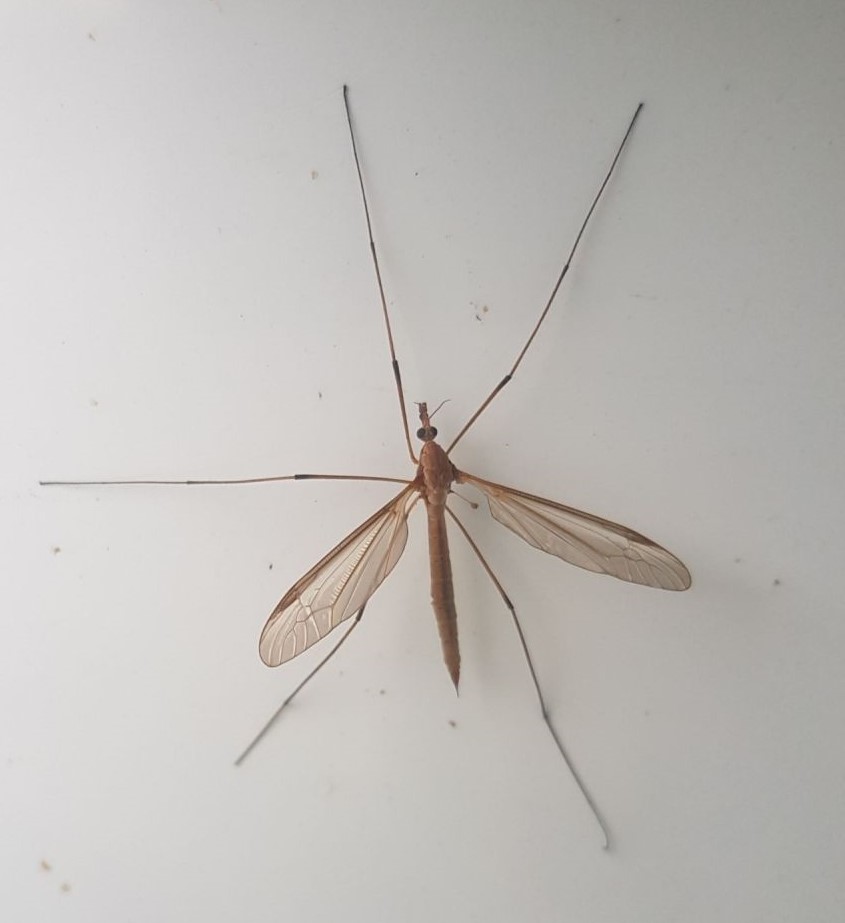
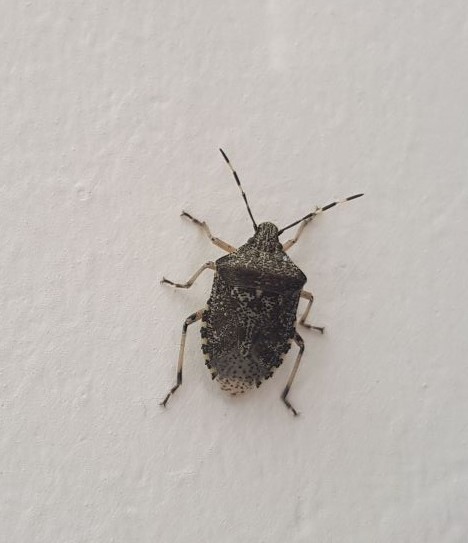
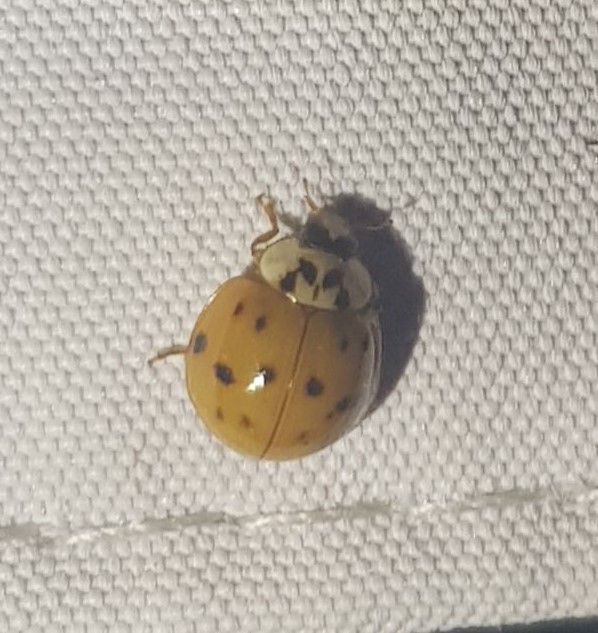
In order to monitor as many insect species as possible, we will also collect many photos of insects other than moths that are attracted to the ARNIs. With the help of taxonomic experts, we will identify the species based on photos and insects collected from the ARNIs after they were photographed. These insects will then be identified and stored in the Phyletic Museum in Jena. We will focus on the following insect groups that frequently fly to light: caddisflies, beetles (especially ground beetles, ladybirds and rove beetles), cicadas, bugs, crane flies, midges, mosquitoes and neuropterans.
Recording biodiversity when species are unknown
AI identification will not work everywhere on Earth as it does in Germany, because there may be no experts available to train the AI, or the species may not yet have been described by scientists. We will therefore work with the University of Jena to develop a method for estimating biodiversity when species are unknown to the AI. We will test this using reliably identified moths in Germany before it can be applied in places where no training data is (yet) available or where a large number of species are new to science, such as in the tropics.