Recording the biodiversity of moths (Lepidoptera) using automated cameras and artificial intelligence

LEPMON – At a glance
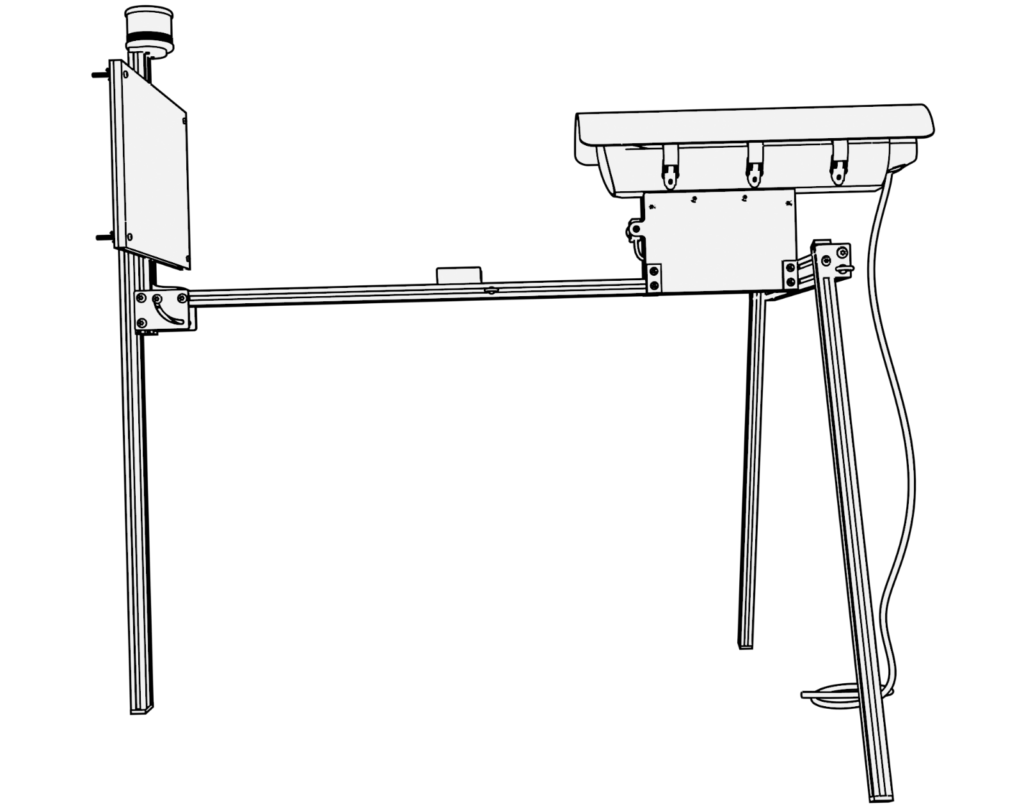
The aim of LEPMON is to automatically record and identify moths and other insects. To this end, we are developing an automated recorder for nocturnal insects (ARNI), which attracts and photographs the animals at night. Artificial intelligence is used to identify the moths in the images. A large number of these ARNIs throughout Germany will make it possible to monitor moth populations and reliably document changes in their numbers. We are working on this in teams from various disciplines and with a large number of volunteers.
The LEPMON project is funded by the German Federal Ministry of Education and Research as part of the Research Initiative for the Conservation of Biological Diversity (FeDA).
Why LEPMON?
The drastic decline in insect populations (“insect decline”) is causing great concern for ecosystems worldwide. There is a lack of affordable, reliable data on insect populations to understand these developments. LEPMON aims to lay the foundations for comprehensive monitoring of moths in Germany. Its main phase began on December 1st, 2024, and will run for three years.
How does LEPMON work?
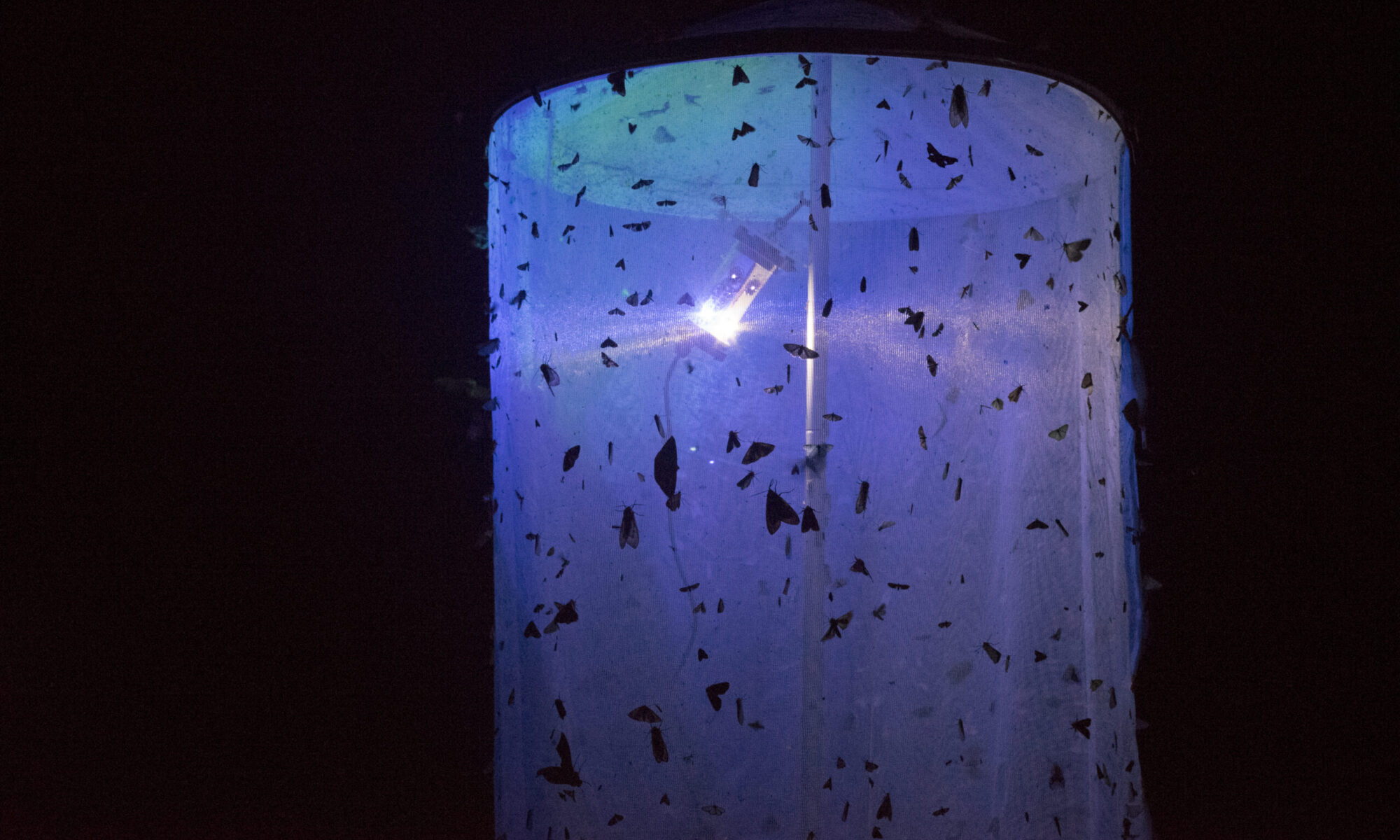
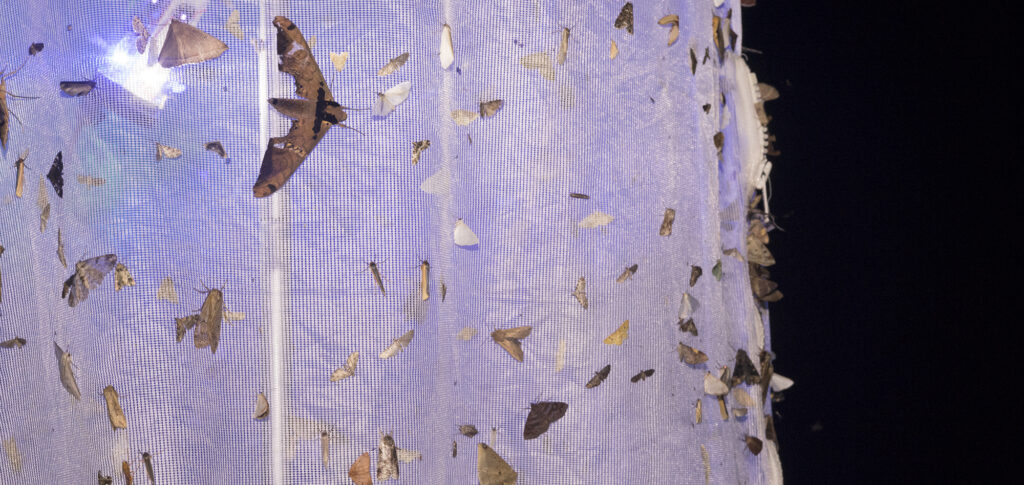
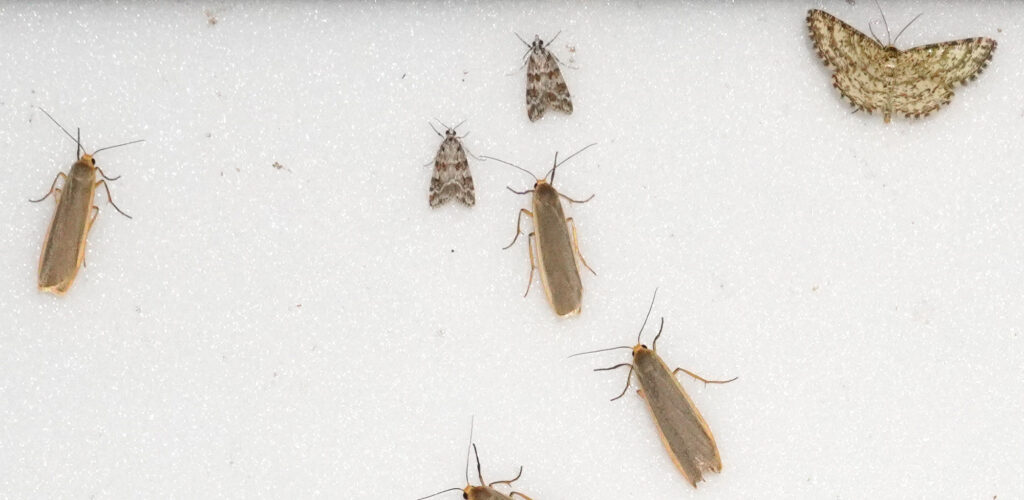
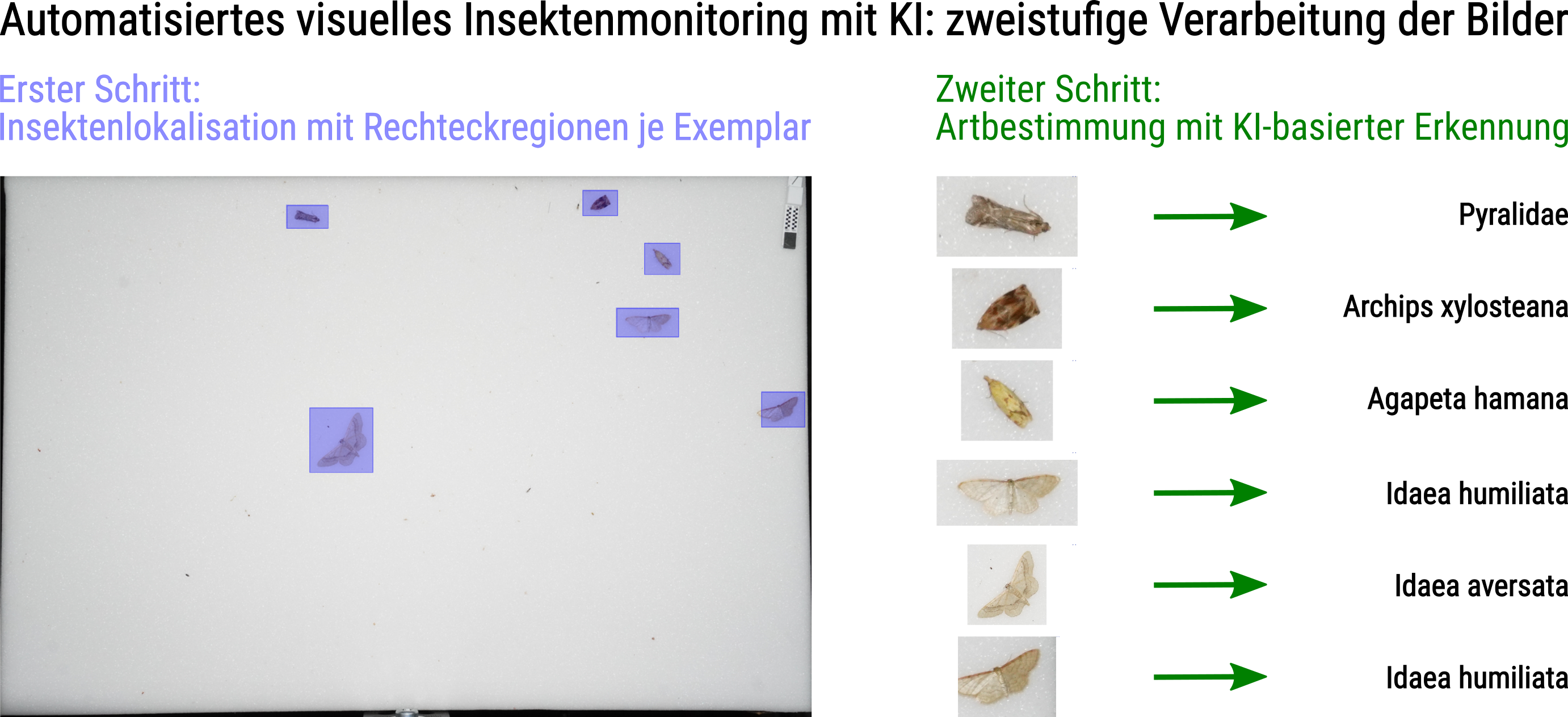
We exploit the (otherwise undesirable) effect that insects are attracted to artificial light. Moths usually settle near the light source, where they can be photographed. To make this possible, we use Automated Recorders for Nocturnal Insects (ARNI) that we developed ourselves. The photos are stored and later evaluated with the help of artificial intelligence (AI). The AI models are trained to recognize and classify the moths in almost all images to species level. Our results so far, with recognition rates above 90%, show that this will be possible.
Why moths?
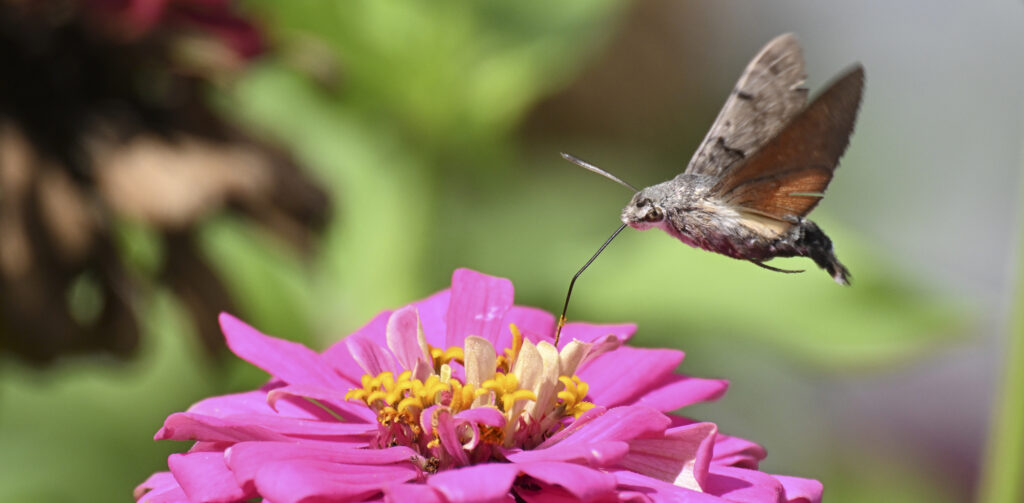
Less well known and conspicuous than butterflies: there are more than 1,100 species of nocturnal moths in Germany alone! They play an important role in ecosystems, both as herbivores (often specializing in a few species) and as pollinators of plants. If ecosystems lose moths, they can no longer function properly. There are even more species of so-called micro-moths that we would like to include in the medium term.
Who is involved in the project?
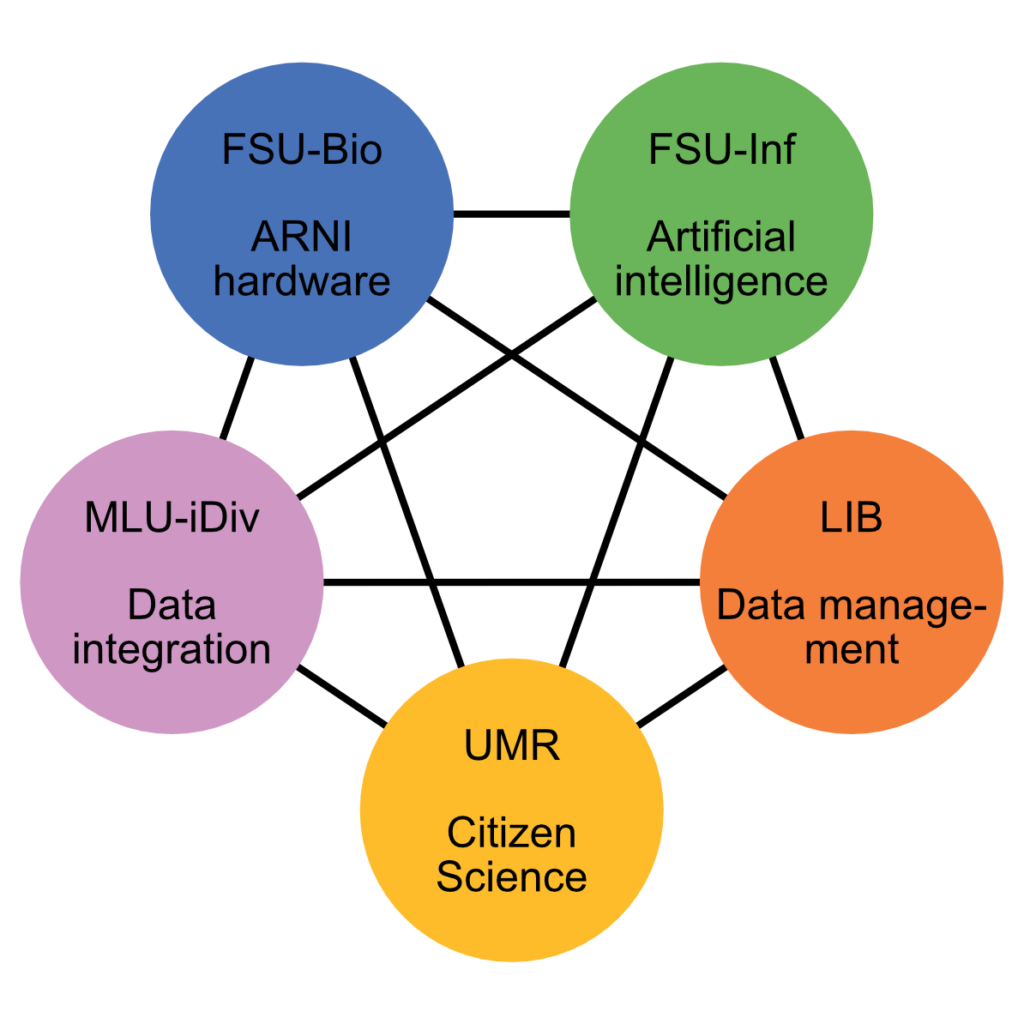
We are a group of researchers with different strengths: The team from the Phyletisches Museum Jena is responsible for developing the technology and has extensive knowledge of moths. The computer science team from Jena is working on the evaluation using artificial intelligence, and the team from Bonn is responsible for managing the large amount of data generated by the project. The team from Marburg is responsible for involving citizens in the project, and the team from Halle is focusing on evaluating the data and dealing with other insects.
Who can participate?
Numerous citizens are already participating in the project in its initial phase, particularly in the program for investigating urban gradients.
Anyone interested in participating in the project can use our contact form. We are particularly looking for experts who would like to participate in the identification of moths. The financial resources of the project are not sufficient to meet all requests for the ARNI. However, authorities, associations, and private individuals have the option of purchasing one or more devices and using the Lepmon data portal. If you are interested, please also use our contact form.
Moths in cities: the urbanization gradient
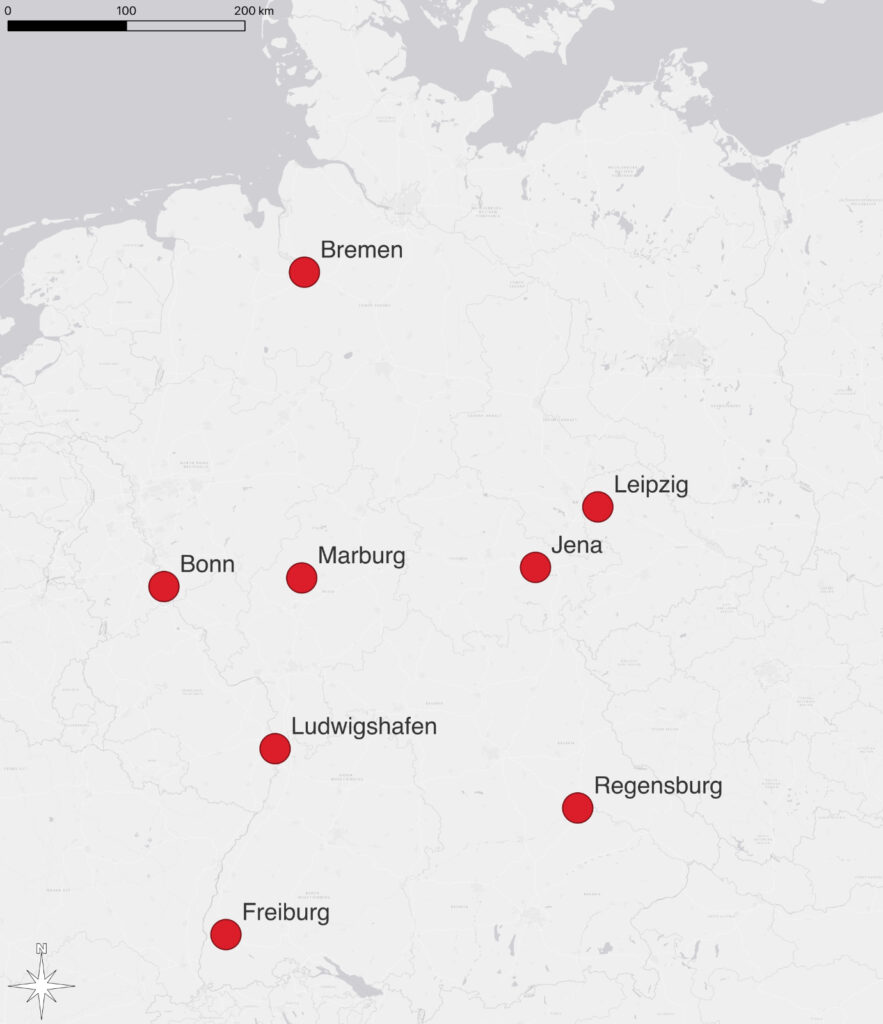
We have started the monitoring program in 2025, initially in eight German cities (Bremen, Bonn, Ludwigshafen, Freiburg, Marburg, Jena, Leipzig, and Dresden). Five ARNI devices are installed in each city, starting in the city center and extending to a forest area outside the city. Along this urbanization gradient, the environment changes dramatically, with declining sealed surface and light pollution, and an increase in food plant availability. Therefore, the diversity of moths should also increase. In our project we will be able to show this in great detail and make precise comparisons between different cities from north to south and from west to east. Above all, with the help of committed citizens, we can learn whether the ARNIs function reliably under continuous operation and we can gather important experience for long-term operation in biomonitoring.
Automatic Recorder for night-active insects (ARNI)
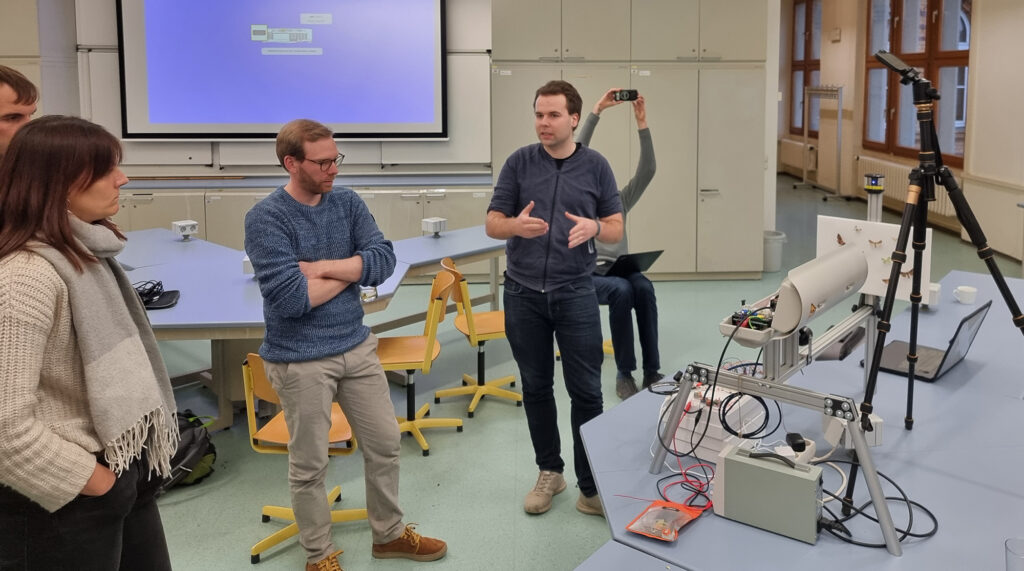
The team at the Phyletic Museum Jena is working with the company k2w Lights (Jena) to develop the ARNI used in this project — one version with a large camera (“Pro version”) and a more affordable version with a smaller camera (“Citizen Science version”). All components of an ARNI must work together under difficult outdoor conditions (including in the canopy and in the tropics) and be controlled by appropriate software. The team in Jena is responsible for all technical matters, as well as for identifying moths and, together with the citizen science team, for establishing contacts with experts.
Citizen science
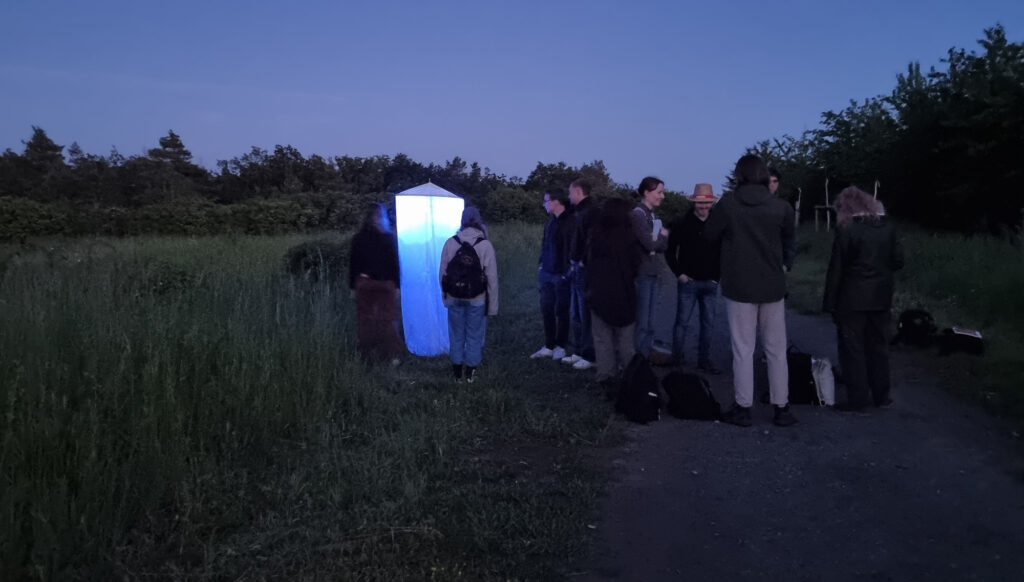
The team in Marburg will develop and test citizen science methods for monitoring nocturnal insects. At the same time, it will support the further development of ARNI and applications for identifying insects using artificial intelligence (AI). Gamification methods, i.e., playful approaches to training AI, for example, will also play a role in this.
Artificial intelligence
The computer science team at the University of Jena is developing robust artificial intelligence (AI) models that enable automated image analysis and species identification of moths and other insects. These AI models will efficiently process the images captured by ARNI and reliably identify the moths recorded. This is a challenge, as there are more than 1,100 species of macro moths, and in total more than 4,000 species of nocturnal moths in Germany. Paul Bodesheim’s team in the Computer Vision Group will integrate various forms of knowledge into machine learning processes, for example through biological taxonomy or the size characteristics of the moths. This will achieve a high degree of accuracy in species identification.

Database management
LEPMON provides various web tools that make it easy to handle the data. These include tools for managing and monitoring the ARNI devices, the ability to upload images from the ARNI, and an AI-supported system that assists in identifying and locating moths in the image. A user friendly data portal ensures that the results are presented clearly. The data collected is organized and stored in several databases. Various interfaces enable the exchange of information with other data portals and online services, both within the project and beyond.
Data analysis
The team at iDiv will first develop statistical tools to provide the ARNI users with reliable abundance estimates of the species identified by AI, e.g., by avoiding multiple counts. Using these data, they will then statistically analyze the effects of urbanization and direct environmental factors at each location in the eight cities. They will also support the other parts of the project by providing training data for other insects, such as bugs and midges, so that the system can monitor a broader range of species.