








Automatic Recorder of Nocturnal insects
The team at the Phyletisches Museum Jena is working with k2w Lights (Jena) to develop the ARNI systems: automatic recorders for nocturnal insects – one version with a large camera (“Pro version”) and a more affordable version with a smaller camera (“Citizen Science version”). All components of an ARNI must work together under difficult outdoor conditions (including in the tree canopy and in the tropics) and be controlled by appropriate software. The team in Jena is responsible for all technical matters, but also for identifying moths and – together with the Citizen Science team – for liaising with experts.
Design of the ARNI
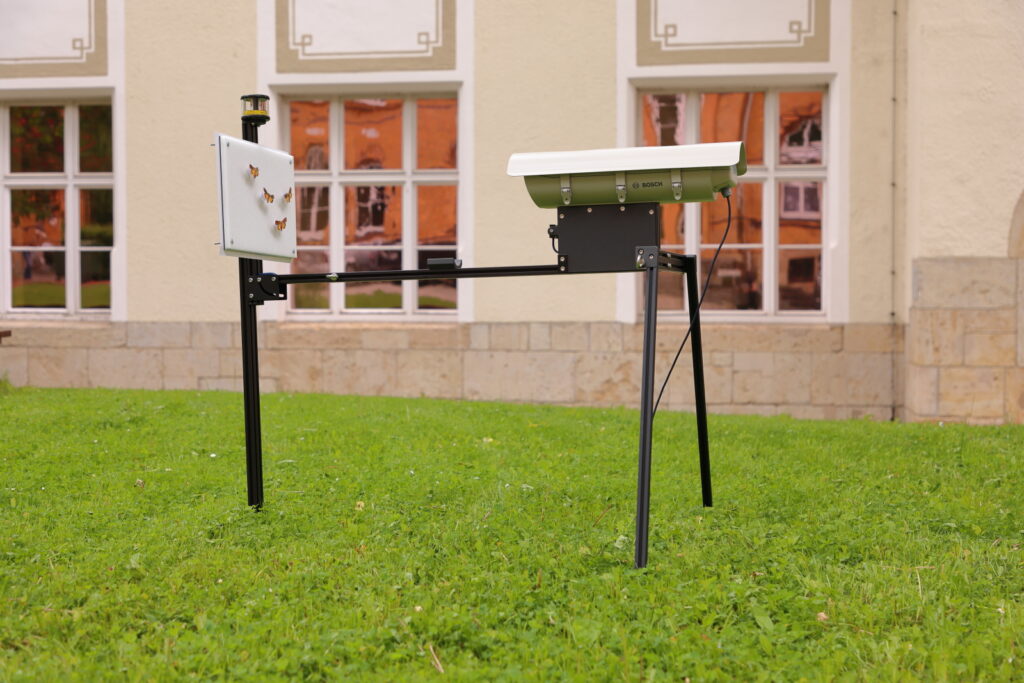
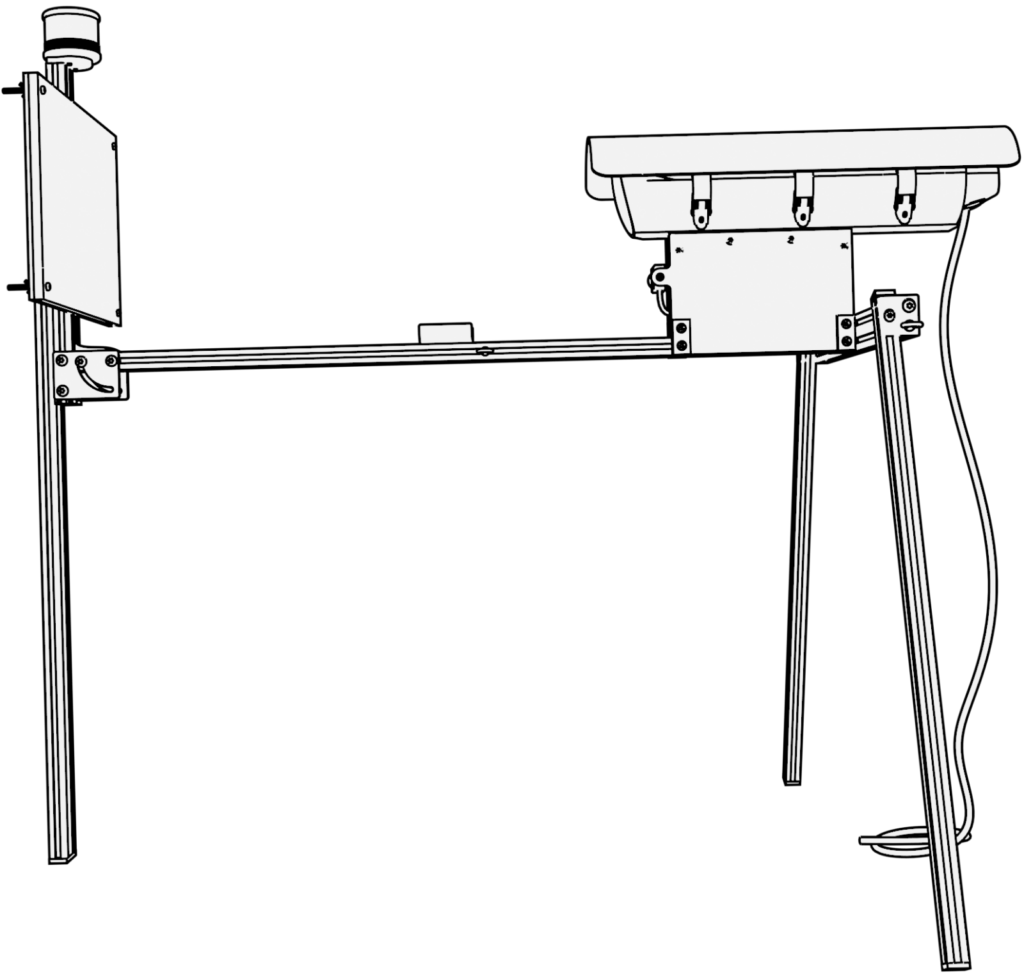
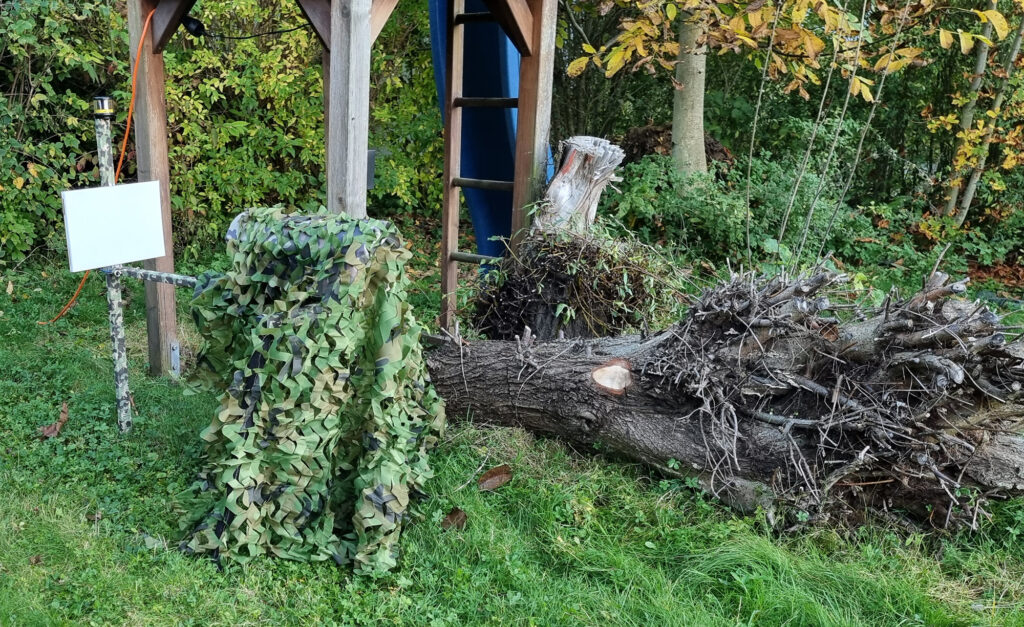
The ARNI consists of a supporting frame made of black anodized aluminum bars. A UV lamp is attached to the front to attract moths; underneath is a white screen on which the moths will sit. A waterproof housing that contains the camera and the electronics is mounted at a distance of 70 cm. From here, the screen is illuminated by a small LED spotlight whenever a picture is taken. The system is controlled by a single-board computer (Raspberry Pi). With the help of sensors, it records not only images but also data on temperature, air pressure, and ambient light. This data is first stored locally on a USB stick, which is changed regularly during system checks. The images are uploaded regularly to the Lepmon annotation and upload portal.
The UV lamp and camera are only operated at night, and a photo is taken every two minutes. The screen with the moths is illuminated for less than a second. The UV lamp appears as only a faint purple glow to humans, but to insects it appears as a very bright light.
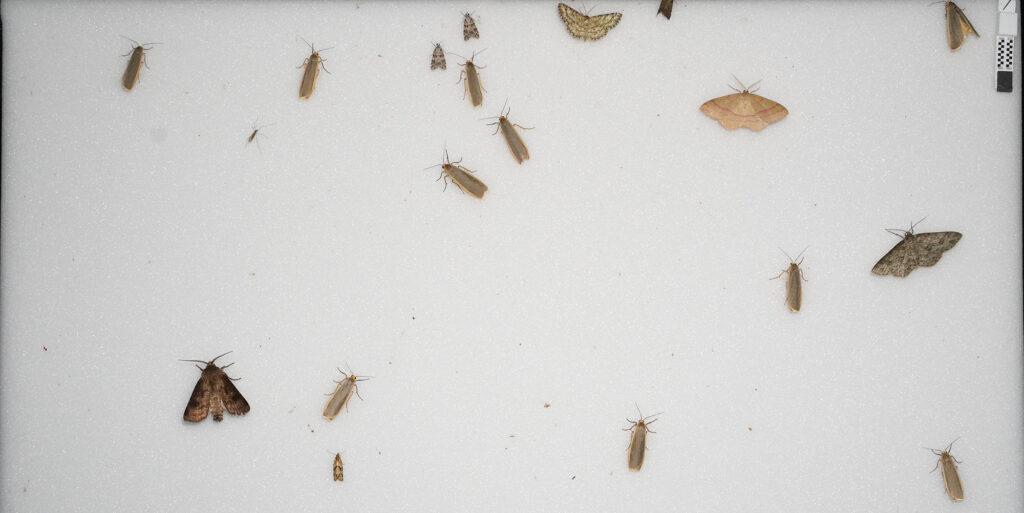
The ARNI works with an Allied Vision industrial camera with a sensor size of 20 megapixels. It is controlled by a Raspberry Pi computer, and uses GPS coordinates to determine the start and end times of operation each night. During the day, the computer is in ‘sleep’ mode. In the evening, the system is booted up and automatic recording begins 30 minutes before sunset. The images for each night are stored in a new folder. This folder also contains a log file and the environmental data in a CSV file. Folders, images, and timestamps in the CSV table follow a project-wide scheme: {sensor_id}-{state}-{county}-{current_date}-T-{current time}. ARNI can be switched off for maintenance and data readout. The data from the USB drive is be uploaded folder by folder to the Lepmon portal.
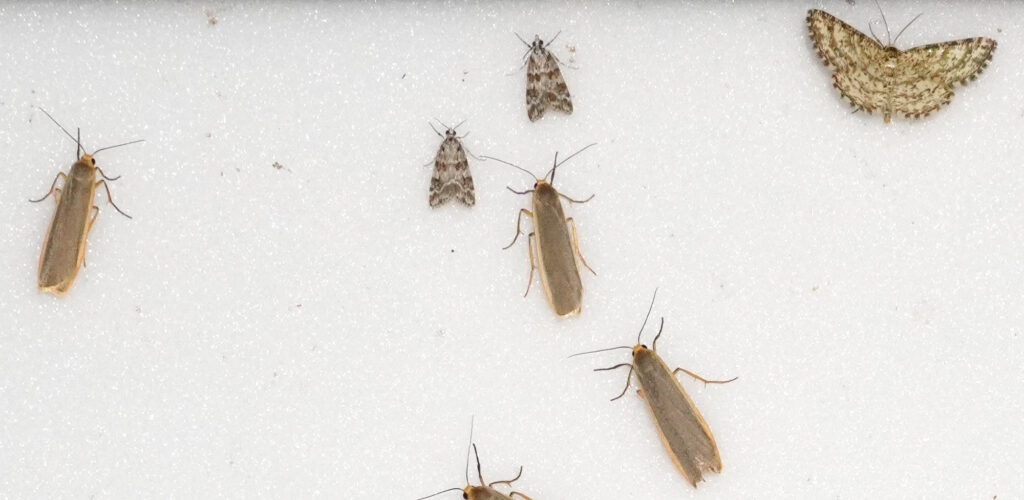
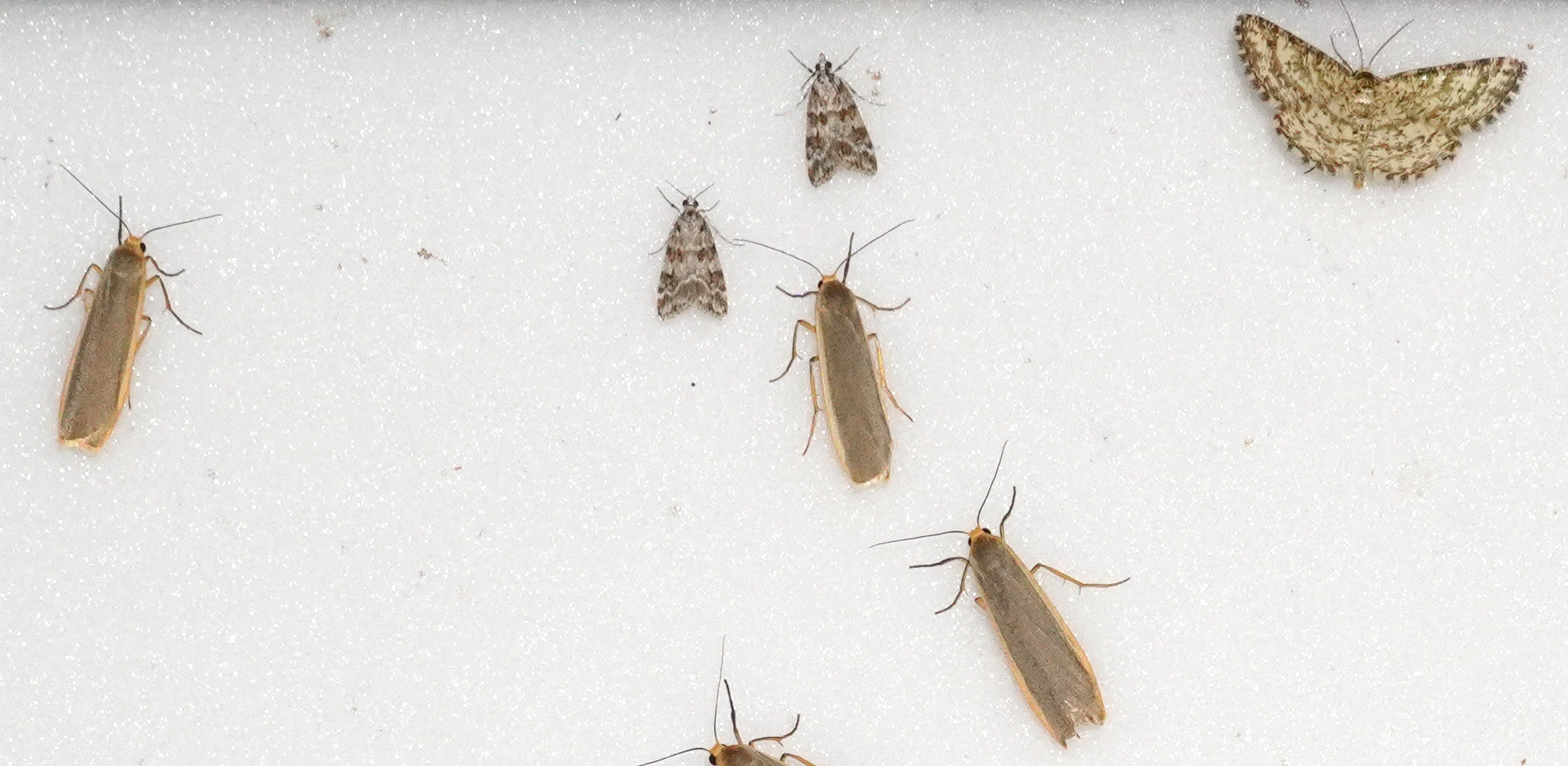
The images from ARNI show all insects on the screen at 2-minute intervals. These can be played back like a flipbook, showing a time-lapse of the insects’ appearance throughout the night. Please note: The video has HD resolution. The image files from ARNI have a significantly higher resolution (20MP).
Inspection and maintenance of an ARNI
Inspectiin the ARNI starts with an external check for damage caused, for example, by vandalism or wild animals. We also recommend cleaning the window of the housing regularly with a microfiber cloth. The ARNI should be switched off before the USB stick is replaced, and afterwards, the ARNI is switched on again. A diagnostic loop can be called up by pressing a button, and allows you to check operational readiness. If errors occur, ARNI provides instructions on how to rectify them. Our project staff are also available to answer any questions you may have. Detailed documentation on the software and hardware is available for download.
ARNI: Testing under extreme conditions
The contribution of the team from the Phyletic Museum Jena lies in particular in the maturation of the technology, so that the system can, ultimately, be used worldwide. Our focus is on 40 ARNI devices, which will be set up along urban gradients. We will also test the technical limits of the ARNI in the field (in the tree canopy and under extreme climatic conditions in the tropics) and integrate it into existing monitoring programs in order to establish long-term collaborations and transition to the actual monitoring of nocturnal insects.

ARNI: Simplified model for broad application
We’ve been developing a simplified version for winter 2025/2026. It will have a simpler camera with a smaller sensor and will be less costly than the Pro models that are already in operation. We will use it for the citizen science project and is scheduled to go into series production in winter 2026.
Notes on locations (urbanization gradient)
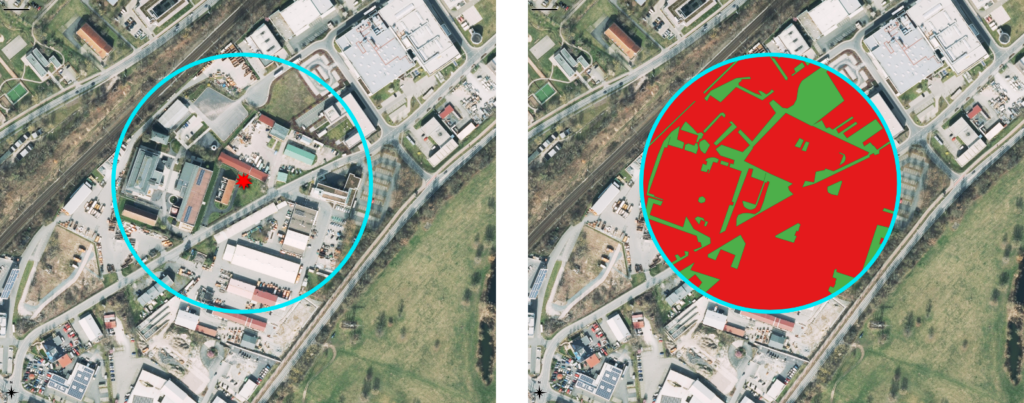
ARNIs will be installed at five different locations in eight cities: from the city center with a high degree of sealed surface, to the periphery with little sealing, and finally to a mixed forest area on the outskirts. The sealing levels should be approximately 80 – 60 – 40 – 20 – 0%. Ideally, a power connection should be available. Preference will be given to locations that are not accessible to the public. For locations without a power connection, battery power is an option. An ARNI can be installed at the edge of a garden, for example, but it should not be positioned too close to a wall or hedge. Likewise, the location should not be directly illuminated by a street lamp or similar. There is at least one local contact person in each city, but all ARNIs are generally managed by the team in Jena. We ask participants to replace the memory sticks approximately every two weeks and upload the data to our portal. Depending on the internet connection, this can take up to several hours. We therefore recommend uploading the data overnight.
ARNI in use
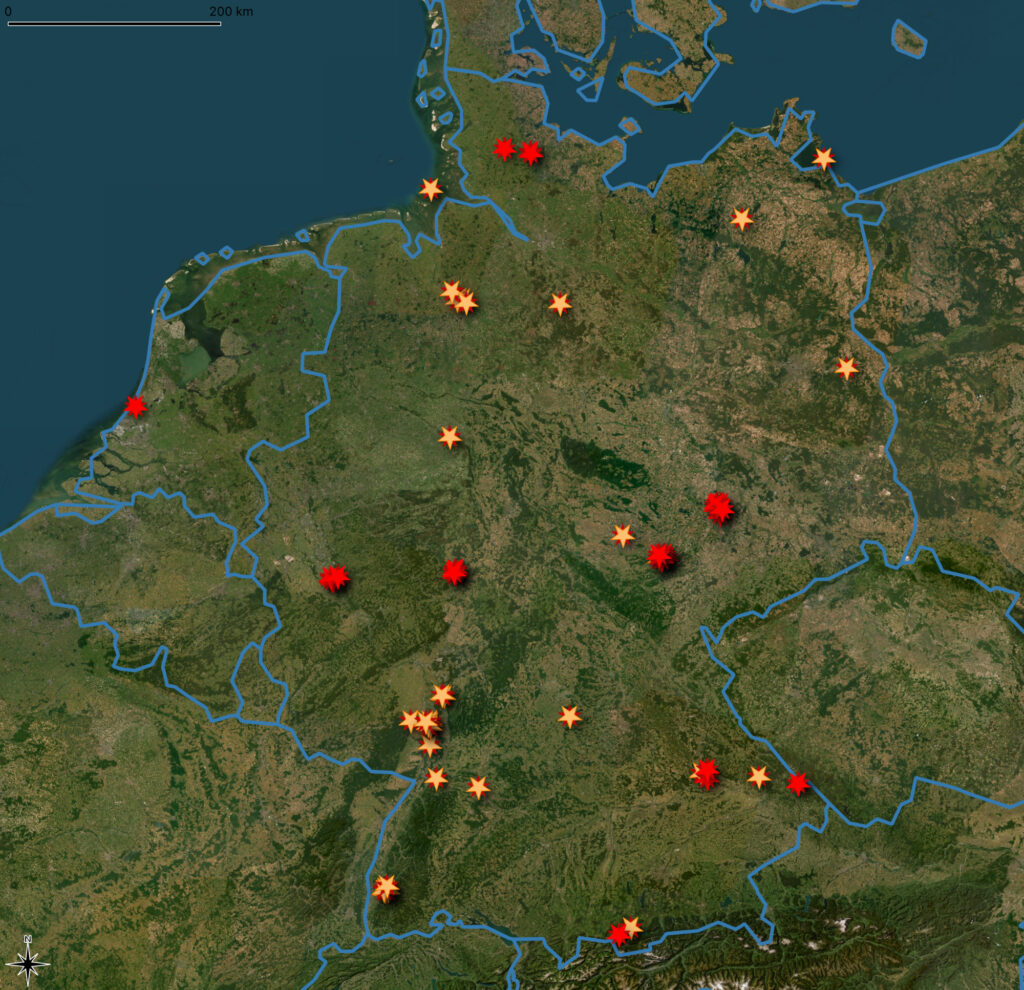
We have been using ARNI for monitoring nationwide. We have covered both urban gradients and specific habitats, and photographed numerous insects together with our partners. The network (red stars) has continued to grow throughout the season we establish additional locations (yellow stars).