urbanization gradient
In 2025, we have started monitoring moths in several German cities (Bonn, Ludwigshafen, Marburg, Jena, Leipzig, and Regensburg). Five camera light traps have been set up in each city, starting in a forest area outside the city, and extending to the city center. Along this urbanization gradient, the environment changes dramatically, with increases in sealed surface and light pollution, and a decline in food plants. The diversity of moths should therefore also decline. With our ARNI camera systems we can show this in great detail and can compare different cities from north to south and from west to east. But most importantly, with the help of committed citizens, we can test whether our camera system used in continuous operation function reliably, so that we will learn whether it is fit for long-term biomonitoring. Additional ARNIs will be integrated into existing monitoring projects in Germany.
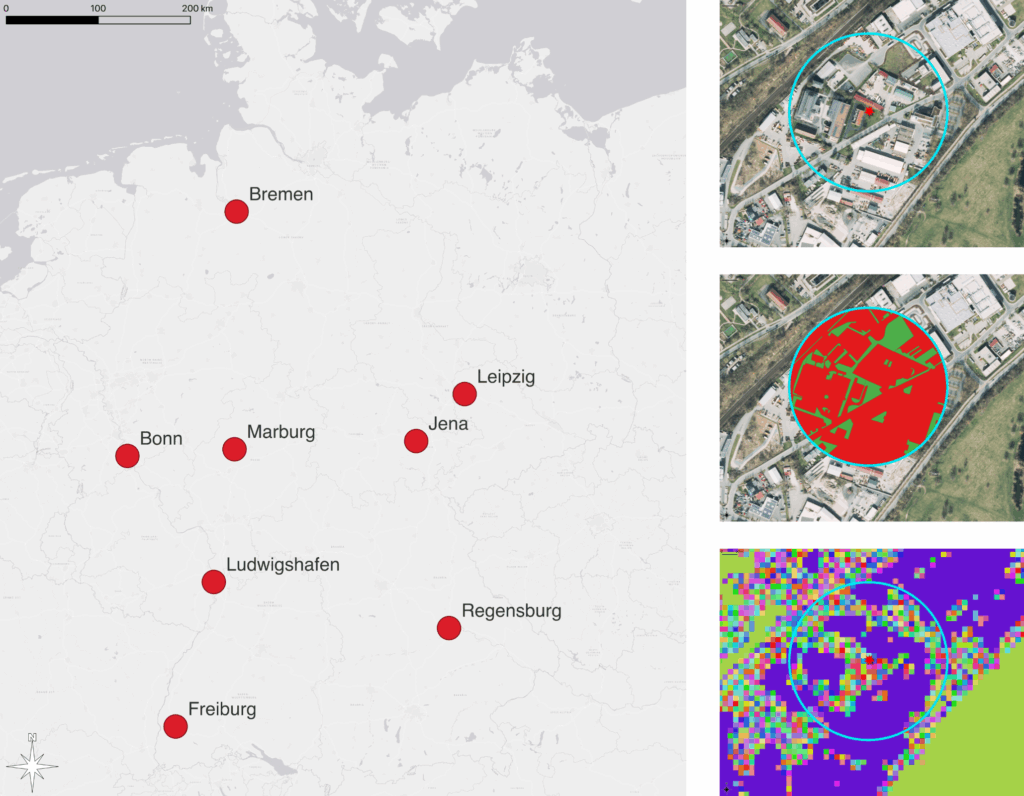
Moths in urban and rural areas
During the project, we will also design simplified models of the ARNI, which will be set up throughout Germany. These can be maintained by associations, museums, schools, or private individuals. It is particularly important for our project that we cover a wide range of habitats so that we can also record rare moth species. Anyone interested in setting up an ARNI will soon be able to find more detailed information here.
Video: Varis Malazezi